
Gettysburg
Managed IT for Gettysburg businesses that carry the county on their shoulders.
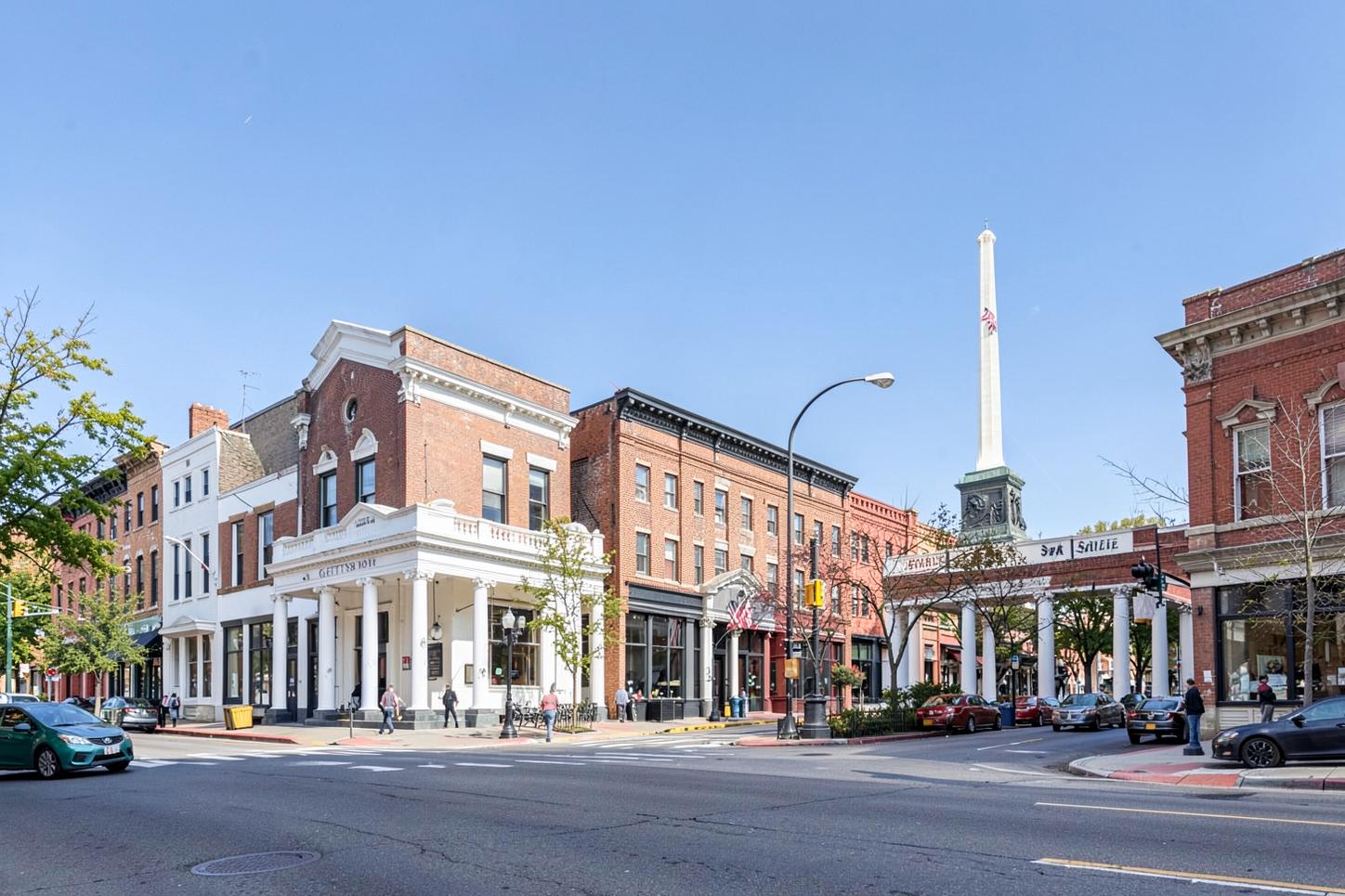
Gettysburg is the Adams County seat, and the businesses here carry a wider range than the town's size suggests. Hospitality that runs on a global tourism draw. A fruit belt that feeds national brands. Healthcare, law, and county government. What they share is the same requirement: IT that works without becoming the thing leadership has to manage.
The pattern
A small town with a bigger workload than most IT setups were built for.
Gettysburg is one of the most visited small towns in America. The battlefield, the museums, and the event calendar bring in millions of visitors a year, and the hotels, restaurants, tours, and retailers that serve them run on systems most guests never think about. Reservations, point-of-sale, card processing, guest Wi-Fi, scheduling. When any of it stumbles, it stumbles in front of the customer, usually at the busiest hour of the busiest season.
Beyond the square, Adams County is an agricultural economy with serious scale. The fruit belt around Biglerville, Arendtsville, and Gardners feeds processors and packers whose product ends up on national shelves. Operations like that run on seasonal surges, seasonal staff, and equipment that has to hold up through the harvest window. IT problems there aren't office inconveniences. They land on packing lines, cold storage, and shipping schedules.
Gettysburg is also the Adams County seat, which means a concentration of law firms, title companies, financial offices, and professional practices serving the whole county. Add WellSpan Gettysburg Hospital and the medical practices around it, and a real share of the local economy operates under HIPAA, client confidentiality, or card-data obligations whether anyone has written that down or not.
The common thread across all of it is distance from help. Gettysburg sits at the western edge of the region. Some IT providers treat Adams County as outside the comfortable service radius, and response times show it. We're headquartered in Mechanicsburg, in the middle of the Central PA region we cover, and Gettysburg is a normal part of the run, not the edge of the map.
The seasonal shape of the local economy creates a specific IT problem. Staffing doubles for the season, then drops. Systems sized for July get neglected in January. Accounts for seasonal hires get created fast and closed slowly, if at all. Access that lingers after someone leaves is one of the most common findings in any security review, and seasonal operations multiply it.
What we manage
IT held to one standard across your whole environment.
6 areas, swipe or use arrows
Microsoft 365 management
Identity, sharing, mailboxes, and licensing managed against a written standard. For seasonal operations, that includes onboarding and closing accounts on a schedule, so access doesn't outlast the season.
Backup and recovery
Monitored backups, real restore testing, and a recovery plan built around your operating calendar. For a hospitality business, that's the season. For a packing operation, that's the harvest window. The recovery timeline gets decided before it gets tested.
Vendor coordination
ISPs, reservation and point-of-sale platforms, packhouse systems, and line-of-business applications handled so your team isn't in the middle. When a problem crosses vendors, someone owns getting it resolved.
Planning and budgeting
Lifecycle, renewals, and security investments surfaced in time to plan. Equipment nearing end of life identified before it fails during your busiest month, not after.
Day-to-day support
Responsive help with root-cause follow-through, whether the issue is at the front desk, in the back office, or out at the orchard. Not the same ticket every month.
Cybersecurity baseline
Endpoint, identity, email, and network controls aligned to CIS Controls, built to hold up under HIPAA, PCI DSS, and client-confidentiality expectations where they apply. Guest networks segmented from the systems that run the business.
Local presence, broader reach
Local matters. Structured enough to cover everything remotely.
We are headquartered in Central Pennsylvania, serving organizations nationwide, and we routinely support Gettysburg businesses with offices, remote staff, and partners outside the area. Standards do not change because the address does.
Onsite work is part of how we operate when it makes the work better, onboarding, project work, site visits, and the moments where being in the room matters. Day-to-day support happens remotely so help arrives quickly.
What changes
IT stops being the thing that gets managed from a distance.
The same problems stop coming back. Recurring issues get addressed at the root, not closed at the ticket.
Security questions have real answers. Clients, insurers, and auditors get documented evidence, not approximations.
Leadership knows what's in place. What's configured, what it covers, and what the plan is when something goes wrong. That answer exists before something forces the question.
Vendors get managed, not tolerated. When a vendor has an issue, there's someone coordinating the resolution. Your team isn't in the middle.
The environment stays current. Patches, licensing, lifecycle, and renewals happen on a schedule. Nothing ages into a problem because nobody was watching it.
IT stops requiring leadership attention to function. The environment runs. When something needs attention, it gets addressed before it becomes an interruption.
If none of this is in place, the gaps don't announce themselves. The same tickets keep coming back. A backup that was never tested fails when it's needed. A security question gets answered with a guess. The environment keeps requiring more leadership attention than it should until something forces the issue.
Who we work best with
Who we work best with in Gettysburg.
Something brought you here. If you're a privately owned business with 25 to 250 employees in Gettysburg or Adams County, IT has probably become more of a conversation than it should be. A system that went down during the season. An insurance application full of questions nobody had documented answers for. A provider that treats Adams County like it's a long way away.
A strong fit
- Hospitality and retail businesses where downtime happens in front of the customer
- Food processing and agricultural operations with seasonal surges
- Professional practices handling client or patient information
- Leadership that wants IT to stop being a recurring conversation
Not the right fit
- Buyers shopping on rate alone
- Companies that want a vendor to do only what they are told.
- Organizations not ready to put security or standards in place.
Common questions
Questions leadership usually asks first.
Continue reading
Related work and reading.
IT for Professional Services
The law, accounting, and advisory firms around Lincoln Square that run on client data.
Read more: IT for Professional ServicesHealthcare IT
Practice systems and patient data held to a documented security baseline.
Read more: Healthcare ITManaged IT across Central Pennsylvania
The regional overview. How Gettysburg and Adams County fit into the broader market we cover.
Read more: Managed IT across Central PennsylvaniaManaged IT in Hanover
East across the county line. Manufacturing and food processing where downtime has a real hourly cost.
Read more: Managed IT in HanoverManaged IT in Chambersburg
West along Route 30. Franklin County covered as a real part of the service area, not the edge of it.
Read more: Managed IT in ChambersburgNext step
Get a clearer view of your IT environment.
Find out what is working, where the risks are, and what needs attention next.